Where to play crash games in Ireland
Three from our list of ten, picked for three different reasons — the widest range of the format, the only bonus a normal person finishes, and the one in between. All are international casinos accepting players from Ireland; none holds an Irish licence. The full table, with the wagering beside every offer, is on the home page.
#CasinoWelcome offerFree spinsWagering
01
HitnSpinWidest crash selection of the ten
up to €1,500
250 free spins40×Visit site
02
iviBetThe one cap you can realistically clear
100% up to €300
170 free spins40×Visit site
03
LanistaAmong the lowest wagering on the list
125% up to €777
250 free spins35×Visit site
Wagering is the multiple in each operator's own bonus terms — 35× on a €100 bonus means €3,500 through the games before a withdrawal is possible. It is the number that decides whether an offer is worth taking, and at a crash casino there is a second one to check on top of it, further down this page. Amounts and conditions change without notice.
What crash games are, in one paragraph
You put money in before the round starts. A multiplier begins at 1.00× and climbs. You press cash out and take your stake back multiplied by whatever the number said at that instant. If the round crashes before you press, the stake is gone. That is it — Aviator dresses it up as a plane, Plinko as a falling ball, Mines as a grid of tiles, but the engine is the same in all of them.
What makes the format different from a slot is not the graphics. It is that the outcome is fixed before you act, but your payout is not. A slot decides everything the moment you press spin. In crash games the crash point is already set, and what changes the money is your timing.
Where the multiplier comes from
The crash point for each round is drawn before the round is visible to anyone. The provider generates a random value, runs it through a formula, and out comes the multiplier at which the round will end. Nothing you do during the round changes it. The plane is an animation of a number that already exists.
The distribution is heavily weighted to the bottom. In a typical crash game, roughly half of all rounds end below 2×, and the long runs that everyone remembers — the 50×, the 100× — turn up a fraction of a per cent of the time. That is what makes the format feel the way it does: mostly small, occasionally spectacular, and the spectacular ones stick in the memory in a way the forty short rounds before them do not.
Where the house edge hides
If the multiplier were a pure mathematical inverse, the game would pay back exactly 100% and no operator would run it. The edge is built in as a small chance that the round ends instantly at 1.00×, before anyone can cash out at all. That single outcome, occurring around three times in every hundred rounds, is where the entire house advantage lives.
Which gives the number quoted everywhere: an RTP of about 97%. It is genuinely better than the 96% of an average slot, and it is the strongest thing you can say in the format's favour.
But apply it honestly. Expected cost = total staked × (100% − RTP). Put €500 through at 97% and the maths takes €15. The catch is the clock: a crash round can be over in five seconds, a slot spin takes four or five, and the temptation to fire off another round immediately is the whole design. Three times the volume at 97% costs more than the original volume at 96%. The percentage is not the problem. The pace is.
What «provably fair» actually proves
Crash games usually advertise provable fairness, and it is a real mechanism rather than a slogan — but it proves a narrower thing than most people assume.
Before the round, the operator publishes a hash of a server seed. You supply, or are given, a client seed. After the round, the server seed is revealed and you can verify that hashing it produces the value published earlier, and that combining the two seeds yields the crash point the round actually used.
So it proves the operator did not change the result after seeing your bet. That is worth having. What it does not prove is that the odds are generous, that the game pays 97%, or that the operator will pay out what you win. Those are separate questions, and provable fairness answers none of them.
The strategies, and why they fail
Every crash game attracts betting systems. All of them fail, and they fail for the same reason: no sequence of stake sizes changes the expected value of a game with a fixed house edge.
The Martingale. Double after each loss so one win recovers everything. It works right up until it doesn't. Eight losing rounds in a row from a €1 stake requires €256 on the ninth, and a run of eight is nothing unusual at a game where half of all rounds end below 2×. What stops it is not luck but arithmetic — you meet the table's maximum bet, or the end of your balance, and at that point the entire ladder is lost at once.
Low multiplier, high frequency. Cash out at 1.2× every round and win about 80% of the time. It feels like a system because most rounds are green. The 20% that are not are each worth five of the winners, and the 3% instant crashes take the difference. It converges to the same 97%, just more slowly and with far more clicks.
Reading the history panel. Five reds in a row, so a big one is due. It is not. Each round is generated independently of the last, and the panel is there because it makes the game feel like it has a rhythm. It is the gambler's fallacy with a user interface.
The only setting that genuinely changes your outcomes is auto cash-out — not because it improves the odds, but because it makes the decision in advance, when you are calm, rather than mid-round when the number is climbing.
The three we cover
The format has dozens of titles and three that matter for most players in Ireland. Each has its own quirk worth knowing.
#GameTypical RTPYou controlThe quirk
01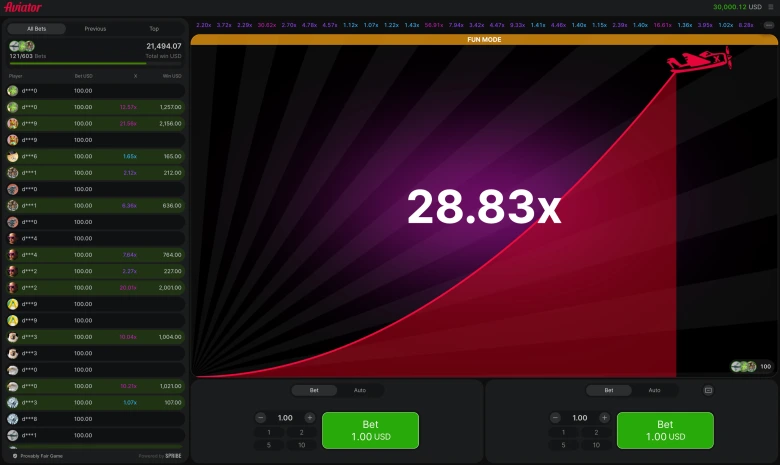
AviatorThe one that made the format
~97%
cash-out timingtwo bets per roundRead the guide
02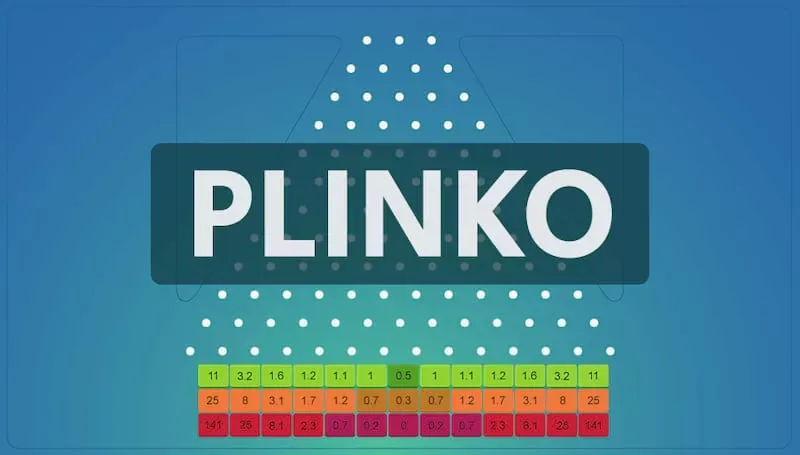
PlinkoVolatility on a dropdown
~97–99%
rows and risk levelno timing at allRead the guide
03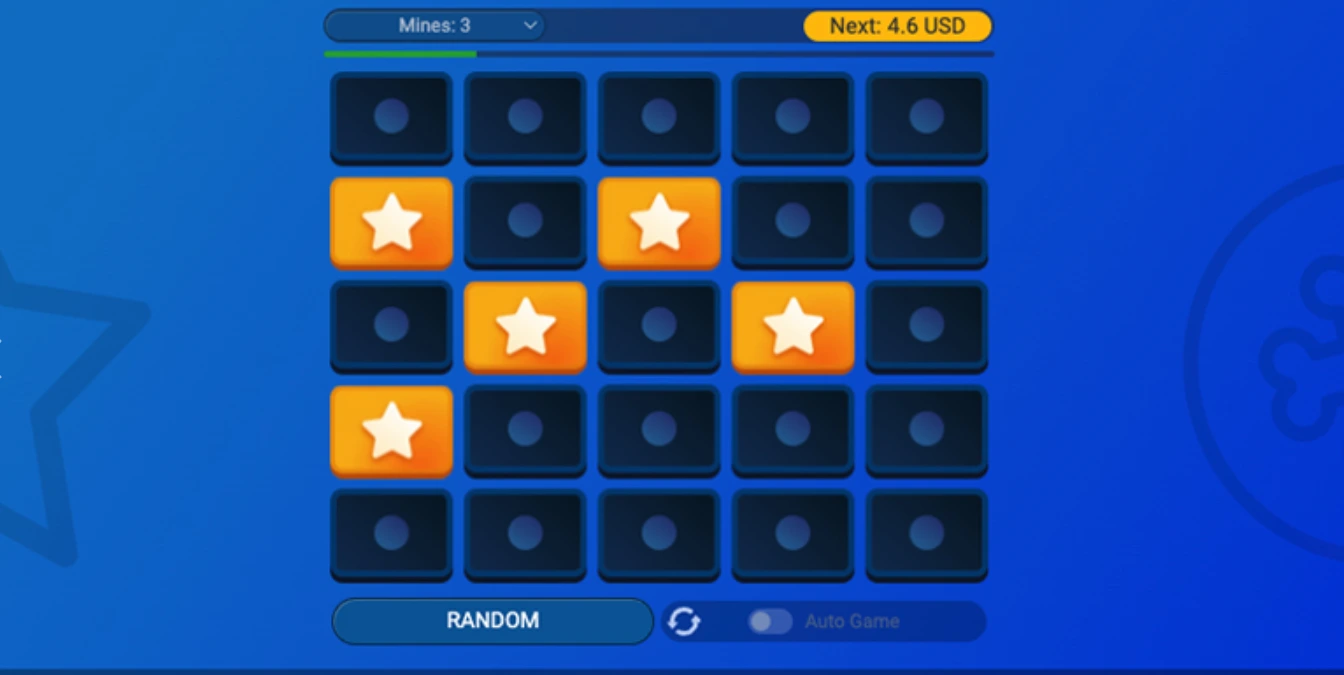
MinesThe odds are calculable
~97%
grid size and when to stopexact probability per tileRead the guide
RTP figures are the values published by the game providers and can be configured differently by individual operators — the number shown in the game's own info panel is the one that applies to you. None of the operators we list holds an Irish licence; all are international casinos accepting players from Ireland.
Before you accept a bonus at a crash casino: check the game contribution table. Crash titles frequently count 10% or 20% towards wagering where slots count 100%, and at some operators they count nothing at all. That single line decides whether a bonus is worth taking. The ten sites and their offers are on the
home page.
Common questions
What is the RTP of crash games?
Around 97% for most titles, against 96% for an average slot. The edge is built in as a small chance — roughly three rounds in a hundred — that the round ends instantly at 1.00× before anyone can cash out. Individual operators can configure the figure, so check the game's own info panel rather than trusting a number on a comparison site, including this one.
Are crash games rigged?
The crash point is generated before the round starts and cannot be changed once your bet is placed — and with provably fair games you can verify that yourself afterwards by checking the server seed against the hash published beforehand. What that does not tell you is whether the operator will pay out promptly, which is a separate question about the casino rather than the game.
Can you beat a crash game with a betting system?
No. No sequence of stake sizes changes the expected value of a game with a fixed house edge. The Martingale meets the table limit or the end of your balance during a losing run, and a run of eight is unremarkable in a game where half of all rounds end below 2×. Low-multiplier strategies converge on the same 97%, just more slowly.
Does the round history tell you anything?
Nothing at all about the next round. Each crash point is generated independently, so five low rounds in a row make a high one no more likely than it was before. The panel exists because it makes the game feel like it has a rhythm — which is exactly why it is worth ignoring.
Which crash game is best to start with?
Mines, if you want to understand what you are doing, because it is the only one where you can calculate the exact probability of the next tile before you click it. Aviator if you want the format at its purest. Plinko is the gentlest, since there is no timing decision at all — you set the risk level and drop the ball.